What a Month of Small Things Actually Looks Like
Part of: Monthly intentions
Plan a gentler month, notice your patterns, and see how small things add up.
Read the complete guideQuick: what did you do for yourself this month?
If you're like most people, your mind just served up a highlight reel of what you didn't do. The runs that didn't happen. The book still on the nightstand. The meditation app you paid for in January.
This is a memory problem, not a discipline problem. Single small actions — a ten-minute walk, a glass of water before coffee, three lines in a journal — are too small to be memorable on their own. So a month of them evaporates, and what's left is the feeling that nothing happened, even when dozens of things did.
The fix isn't doing more. It's seeing what's already there.
Small things don't feel like they count
There's a reason a two-minute stretch feels like nothing: in the moment, it is almost nothing. The payoff of small actions was never in the individual action — it's in the accumulation, and accumulation is invisible from inside a single day.
This is why so many people quit things that were actually working. The daily experience of a tiny habit provides no evidence of progress, and we're terrible judges of our own progress without help. You can be four weeks into genuinely changing your life and feel, on any given Tuesday, like you're standing still.
What's missing is the month view.
A month, seen all at once
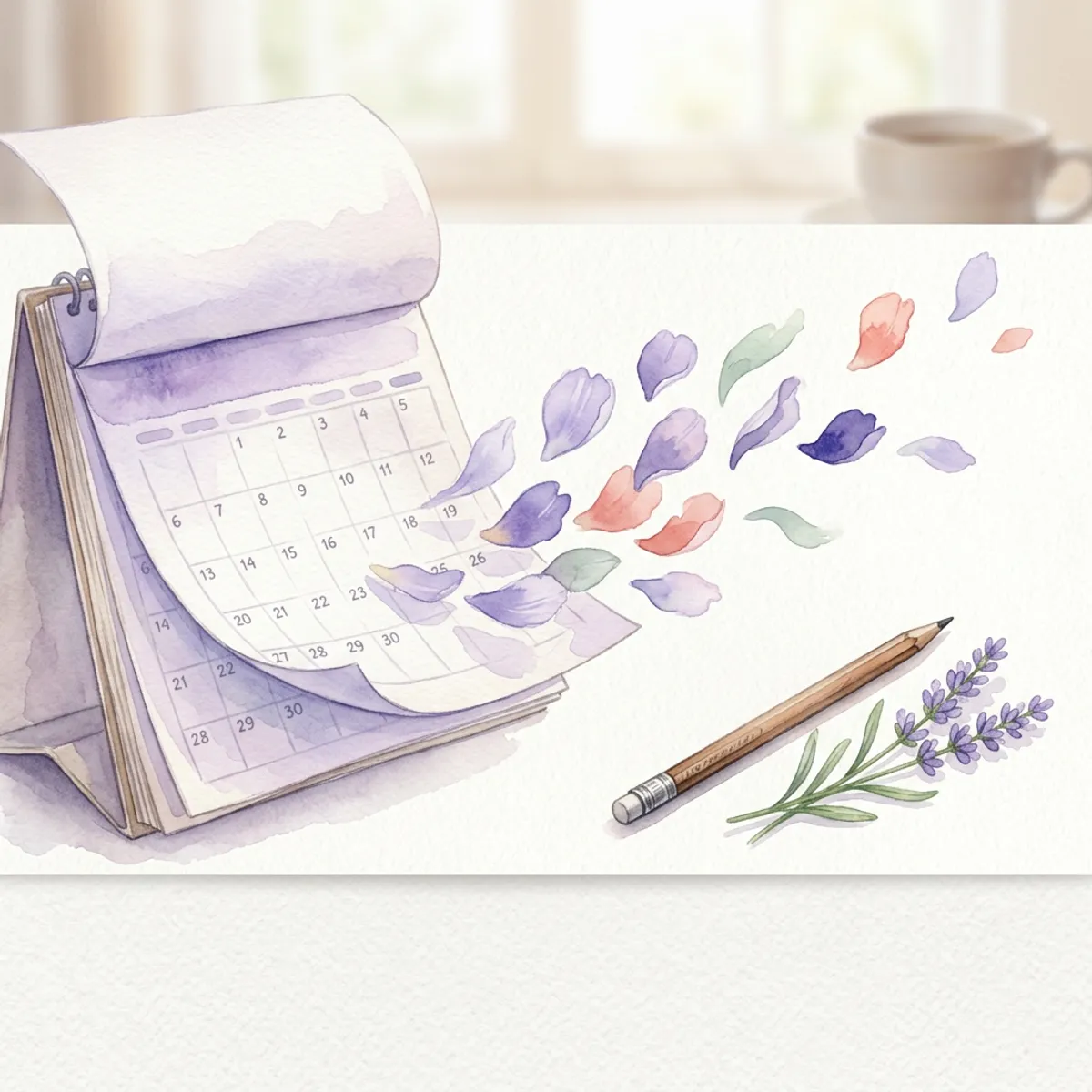
Try this on paper before you try it in any app. Draw a grid of thirty squares. Go back through the month — your camera roll, your messages, your memory — and fill a square for every small thing you did for yourself. Any size. The walk counts. The early bedtime counts. Calling your mother counts.
Most people who actually do this are startled twice.
First by the count: you did more than you thought. Twenty-one small things, when your gut said maybe five. The evaporated memories come back the moment there's somewhere to put them.
Second, by the shape: filled squares cluster and breathe. A dense week, then a sparse one, then dense again. Seen from above, the sparse week doesn't look like failure — it looks like weather. It looks like a life.
A mosaic, not a chain
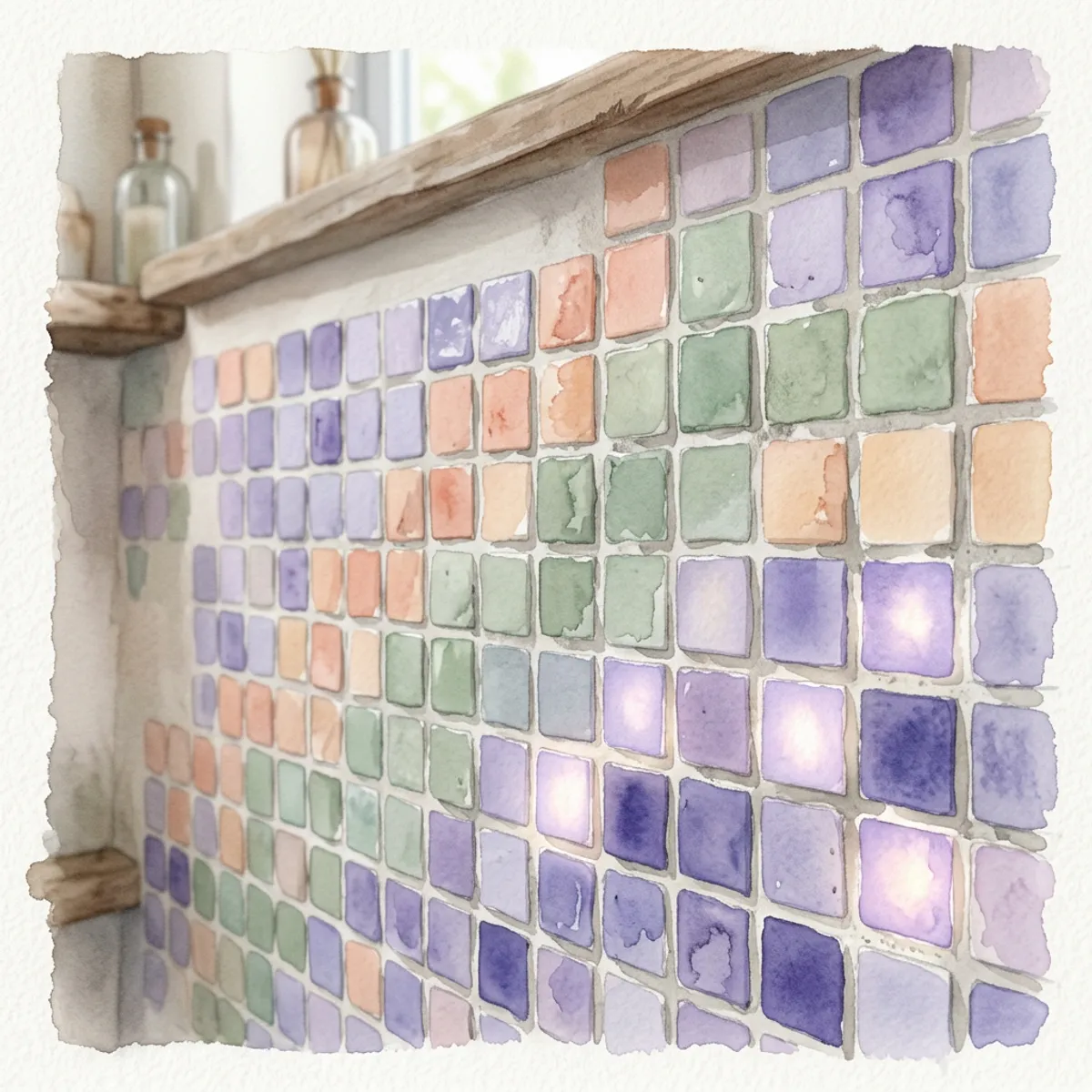
Notice what this grid is not. It's not a chain, where one empty day snaps the whole thing. It's not a graph trending up or down, quietly grading you. It's a mosaic: every filled square is permanently, unconditionally yours, and empty squares are just space between tiles — the way every real mosaic has grout.
The difference sounds cosmetic. It isn't. A chain makes each day a test of the whole. A mosaic makes each day a small contribution to the whole — that shift is why gentle structures outlast rigid ones. Nothing you add can ever be subtracted. There is no mechanism for loss. The only direction a mosaic moves is fuller.
This is the exact idea Intended is built on. Every small thing you do becomes a colored square in your month — coral for health, violet for self-care, sage for mood, one square per small thing. At the end of the month you don't get a score. You get a sentence like: You did 21 small things for yourself in August. Most of them in the evening.
The month can be read
Once a month is visible, something better than counting becomes possible: reading.
A mosaic has patterns a number can't hold. The squares thin out mid-month — that was the week your in-laws visited, and you came back after, which is the skill that matters most. The colors lean violet in the evenings — you're a self-care-after-dark person this season, and that's worth knowing. None of this shows up in a completion percentage. All of it shows up in the picture.
Start with an honest grid
You don't need a system to begin. Thirty squares on the back of an envelope, filled in honestly, will change how this month feels in hindsight — and how gently you plan the next one.
Because the truth was never that nothing happened. The truth was twenty-one small things with nowhere to be seen. Give them somewhere to be seen, and the month you already lived starts looking like what it actually was: a mosaic, slowly filling, one small tile at a time.
It doesn't count streaks. It counts how many times you came back.
Intended is free on iOS. Keep a few small intentions, and read your month back at the end of it.