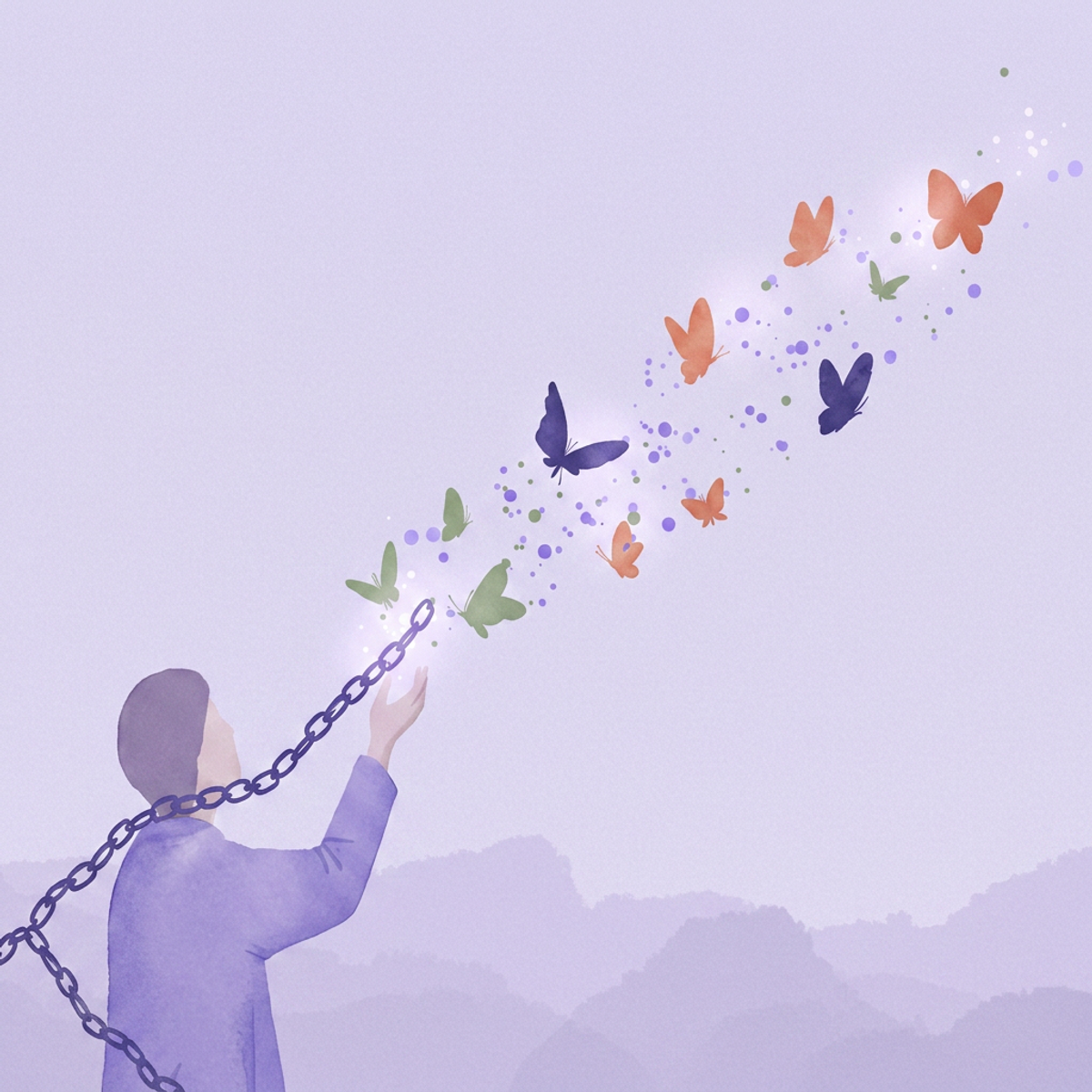
How to Break Free From Streak Anxiety
Part of: Habit tracking without pressure
Choose, build, and return to habits without chains, penalties, or all-or-nothing thinking.
Read the complete guideYou set up the app. You pick your habits. Day 1 is exciting. Day 7 feels like momentum. Day 14, you're proud.
Then, somewhere around day 20, something shifts. You're not doing the habit because it serves you anymore. You're doing it because you're terrified of losing the streak.
That nagging feeling before bed — "Did I log today?" The panic when you realize you forgot. The guilt that lingers after the counter resets. That's streak anxiety. And it's more common than you think.
What streak anxiety actually is
Streak anxiety is the stress caused by maintaining a consecutive-day record in a habit app. It's the moment when the tool designed to support you starts working against you.
Psychologically, it's driven by loss aversion — the same mechanism that makes losing $20 feel worse than finding $20 feels good. Your 30-day streak feels like something you own, and the possibility of losing it triggers genuine anxiety.
This isn't a character flaw. It's a predictable response to a design choice. Most habit apps deliberately use streaks because they drive engagement. But engagement isn't the same as wellbeing.
The signs you might have streak anxiety
It's not always obvious. Streak anxiety often disguises itself as "discipline" or "commitment." But here are some signs:
- You complete habits last thing at night just to avoid breaking the chain, even when exhausted
- You feel genuine dread or guilt when you realize you might miss a day
- You've continued habits that no longer serve you, purely to protect the number
- You feel worse after logging a habit than before, because the relief is fleeting
- Breaking a streak has caused you to abandon the habit entirely
If any of these sound familiar, you're not alone — and you're not failing. The system is working exactly as designed. It's just not designed for your wellbeing.
Why "just ignore the number" doesn't work
People often say, "Just don't look at the streak." But that misses the point. The streak is baked into the entire experience — the notifications, the progress screens, the celebratory animations. You can't unsee a number that the app puts front and center.
This is why habit trackers make so many people feel worse. The mechanic itself is the problem, not your reaction to it.
How to actually break free
Breaking free from streak anxiety isn't about being tougher. It's about changing the environment.
1. Intentionally break a streak. This sounds counterintuitive, but deliberately skipping a day proves something important: nothing bad actually happens. The habit is still yours. You're still the same person.
2. Switch to intention-based tracking. Instead of "Did I do this today: yes or no?" try "What do I intend to do this week?" Intentions are flexible. They make space for bad days without turning them into failures.
3. Remove daily accountability. Weekly check-ins work better than daily logging for most people. They reduce pressure while maintaining awareness. You can still reflect on your progress — just without the daily judgment.
4. Choose a tool that doesn't use streaks. Not all apps are streak-driven. Some, like Intended, are designed around gentle habits that actually last. If your current app is causing anxiety, the kindest thing you can do is try something different.
You deserve habits without dread
Habits should make your life better, not add another source of stress. If your habit app has become something you dread rather than enjoy, that's not a sign to try harder. It's a sign to try differently.
Intended gives your gentle intentions a place in a monthly mosaic and notices when you return after time away. At month's end, it writes you a short letter about your patterns. No streaks, no scores.
It doesn't count streaks. It counts how many times you came back.
Intended is free on iOS. Keep a few small intentions, and read your month back at the end of it.