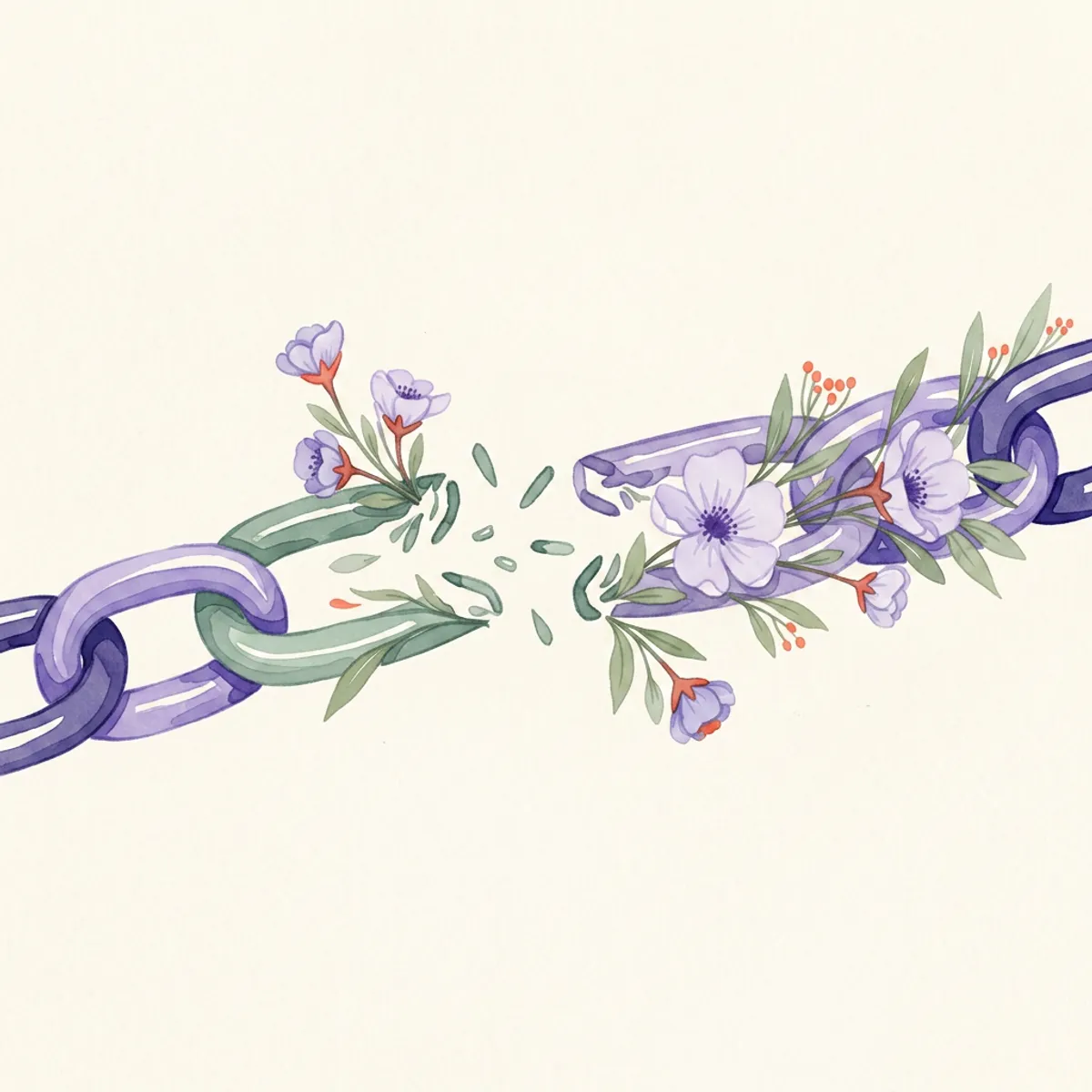
Why Your Habit Tracker Makes You Feel Worse
Part of: Habit tracking without pressure
Habit trackers can feel worse when streaks, red missed days, and completion scores turn a supportive behavior into a daily test. The problem is not tracking itself; it is a design that makes normal interruptions feel like failure.
Read the complete guideYou downloaded the app with good intentions. You tracked your habits for a week, maybe two. Then you missed a day. The streak counter reset to zero. The progress bar went backward. And just like that, the app designed to help you feel better made you feel worse.
This isn't a you problem. It's a design problem.
Most habit trackers are built on a model of behavioral psychology that assumes humans are motivated by loss aversion — the fear of losing progress. And while that works for some people in the short term, for most of us, it creates a toxic cycle of pressure, guilt, and eventual abandonment.
If you've ever felt worse about yourself because of an app that was supposed to make you better, this article is for you.
The streak trap
Streaks are the most popular mechanic in habit tracking, and they're also the most psychologically harmful for most users. Here's why.
A streak works by making you afraid of losing something. After 30 days of meditating, you don't think "I've built a great practice." You think "I can't break my 30-day streak." The motivation shifts from wanting to do the habit to fearing what happens if you don't.
Losing a 30-day streak can feel like losing something you earned, even though the actions you took still happened. If that kind of reset makes you anxious, it might not be the right feedback for you.
The worst part? When the streak breaks (and it always does, because you're human), many people don't just lose the streak. They lose their entire relationship with the habit. The thought process goes: "My streak is gone → All that progress was wasted → What's the point of starting again → I quit."
Apps that rely on streaks aren't helping you build lasting habits. They're creating a fragile system where one bad day can undo weeks of psychological progress.
The score problem
Many habit trackers assign you a daily score, completion percentage, or grade. Check off 4 out of 5 habits? You're at 80%. Miss your morning run? Your score drops.
On the surface, this seems like useful data. But here's what it actually does: it turns self-care into performance.
When your habits have a score attached, you start optimizing for the number instead of the experience. You rush through your meditation to check the box. You log a "workout" that was really just stretching for two minutes because you need the completion point. The habit becomes about the metric, not about how it makes you feel.
For people who are already prone to perfectionism — and research suggests that's a growing number of us — this scoring creates a constant sense of inadequacy. 90% isn't good enough. 95% could have been 100%. And 100% today means the pressure is on tomorrow.
Self-care shouldn't come with a report card.
The daily obligation problem
Most habit trackers assume that habits should happen every day. Miss a day, and the app notices. It sends a notification. It marks the day red. It updates your "consistency" metric downward.
But not every habit needs to happen every day. Exercise is healthier with rest days. Journaling can be weekly. Creative practices benefit from periods of rest and incubation. Even meditation traditions recognize the value of simply being without doing.
When an app demands daily engagement, it creates an obligation where there should be a choice. And obligations breed resentment. How many people have started to hate a habit they once enjoyed, simply because an app turned it into a daily requirement?
The irony is painful: the thing that was supposed to help you build a positive relationship with a habit ends up destroying it.
The all-or-nothing design flaw
Here's a simple test: open your habit tracker and try to log "half a habit." Try to say "I meditated for 3 minutes instead of 20, and that should count." Most apps won't let you. It's either complete or incomplete. Done or not done. Pass or fail.
This binary design ignores one of the most important truths about human behavior: partial effort is still effort. Going for a 5-minute walk when you planned a 30-minute run isn't failure — it's showing up despite the resistance. Writing one sentence when you planned a full journal entry isn't nothing — it's keeping the connection alive.
But most habit trackers treat these as the same as doing nothing at all. And when your app consistently tells you that your genuine effort doesn't count, you stop trying.
What makes people feel worse: a summary
The common thread across all these design flaws is simple: most habit trackers treat you like a machine that should produce consistent output every day, and any deviation from that output is a failure.
But you're not a machine. You're a person with:
- Variable energy levels
- Unpredictable life circumstances
- Good days and bad days
- Physical and mental health fluctuations
- Responsibilities that shift and change
A tool that doesn't account for any of this isn't helping you. It's just giving you a new way to feel inadequate.
What a better habit tracker looks like
If we strip away the streaks, scores, daily obligations, and binary completion, what's left? What does a habit tracker look like when it's actually designed to make you feel better?
No streak counters or failure states. Your progress should never reset. A missed day should be invisible, not punished. The app should feel just as welcoming on day 1 as on day 100.
Gentle language that reframes, not judges. Instead of "You missed 2 habits today," imagine "Welcome back. What felt right today?" The language an app uses shapes how you feel about yourself when you use it.
Weekly reflection instead of daily scoring. Instead of grading every day, a better approach invites you to reflect: "How did this week feel? What served you? What didn't?" This creates self-awareness without self-criticism.
Focus areas instead of rigid goals. Instead of "Run 3 times this week," try "Move your body in ways that feel good." Focus areas honor the direction without demanding a specific destination.
Progress that never resets. Every time you show up, it should add to your story, not start a new one. Progress isn't a streak — it's a gradual accumulation of moments where you chose to care for yourself.
Room for rest. A truly good habit tracker should make it easy to take a day off, a week off, or a month off — and come back without any penalty, any guilt, or any "getting back on track" narrative. You're not on a track. You're living a life.
The shift from tracking to noticing
Perhaps the biggest difference between a harmful habit tracker and a helpful one is philosophical. Most apps are built around tracking — counting, measuring, scoring, comparing. But the most meaningful growth can't be quantified.
The alternative is noticing. Instead of asking "Did I complete my habits today?" you ask "How am I showing up for myself lately?" Instead of counting days, you notice patterns. Instead of chasing a number, you pay attention to how you feel.
This shift — from tracking to noticing — is subtle but transformative. It turns habit building from a performance into a practice. From something you do for a score into something you do for yourself.
Why we built Intended differently
We built Intended because we were tired of apps that made us feel guilty for being human. We were tired of the streak counters, the red badges, the "You're falling behind!" notifications. We wanted a tool that felt like a deep breath, not a deadline.
Intended turns the small, gentle things you do into a monthly mosaic. It notices when you come back and which actions you're glad you did, then writes a short letter about your month. No streaks, no scores.
Because the point of building habits was never to be perfect. It was to live a little more intentionally. And any tool that makes you feel worse for trying isn't doing its job. See how Intended compares to Habitify, Streaks, Productive, and other habit trackers.
At a glance
| What you notice | Design mechanism | Gentler alternative |
|---|---|---|
| Dread before opening the app | Daily obligation | Optional check-ins |
| One miss feels enormous | Loss aversion around streaks | Progress that never resets |
| Avoiding the app after a gap | Red failure states | Returns that are welcomed |
| Doing it only for the number | Scores replace intrinsic motivation | Reflection on what helped |
Frequently asked questions
Are habit trackers bad for everyone?
No. Some people enjoy precise measurement and streaks. A tracker becomes unhelpful when its feedback creates dread, avoidance, or all-or-nothing thinking.
Why do broken streaks feel so discouraging?
Loss aversion makes losing an accumulated number feel larger than missing one action. A reset can falsely suggest that earlier effort no longer counts.
What should I use instead of a streak counter?
Try a monthly mosaic, paper notes, or an app that preserves progress and welcomes returns instead of highlighting absences.
Your wellness app should feel like self-care
Intended replaces red missed days and broken chains with a gentle mosaic that remembers every small thing.